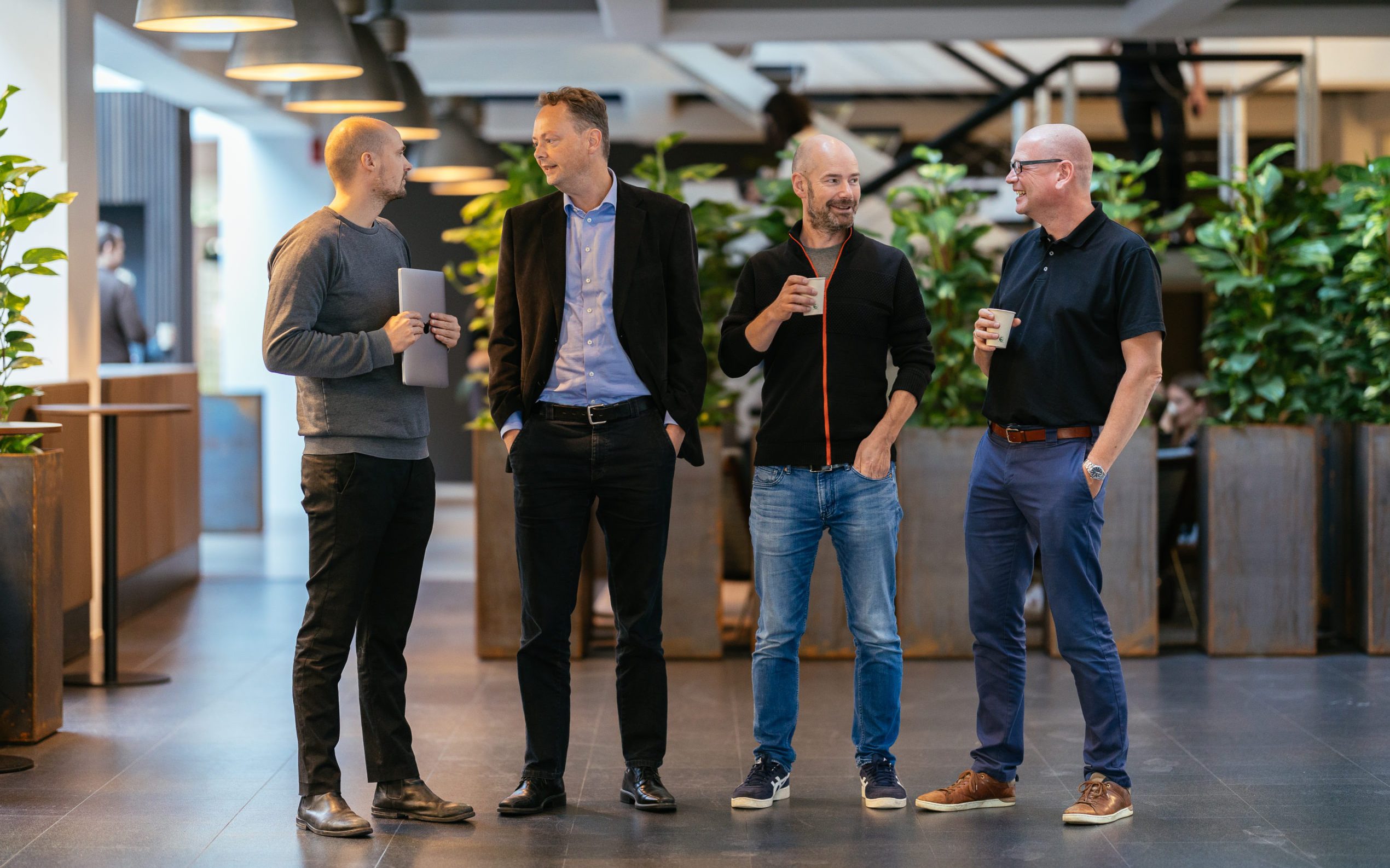
I have regularly written about impressions and news from this year’s RE:Invent conference in Las Vegas, and this article concludes this year. Although this year there was “only” room for 25,000 participants, the impressions were many. Four of Las Vegas’ largest hotels and conference centers hosted the approximately 1,500 sessions, which ranged from keynotes to regular talks and tutorials to the opportunity to get individual advice and guidance from the AWS experts.
Werner Vogels Keynote
AWS CTO, Werner Vogels, opened with a little intro movie with the plot borrowed from Hunter Thompson’s “Fear and Loathing in Las Vegas”. I can’t help but wonder what the father of Gonzo journalism would say about providing entertainment for one of Corporate America’s biggest events – he probably wouldn’t have been happy. But a fun and well-produced feature.
Nevertheless, Vogels’ keynote was worth watching (and you can watch it yourself here: AWS re:Invent 2021 – Keynote with Dr. Werner Vogels ) – but if you don’t have time, here are some highlights:
Vogels started by talking about the development of AWS over the past 15 years and mentioned that AWS customers today start up 60 million virtual machines – per hour.
He touched on the principles for designing the various AWS services, with a key one being: “All complex systems that work are built on simple systems that worked” (Gall’s Law). We know this principle from the way Unix is built, and it is also very similar to the way we want to work in relation to agile methods. And it’s nice to have something recognizable to lean on. But since AWS is known for never turning off a service, the price is that all these “primitives” are visible, which means that it can be difficult to know which services to choose.
Amplify Studio
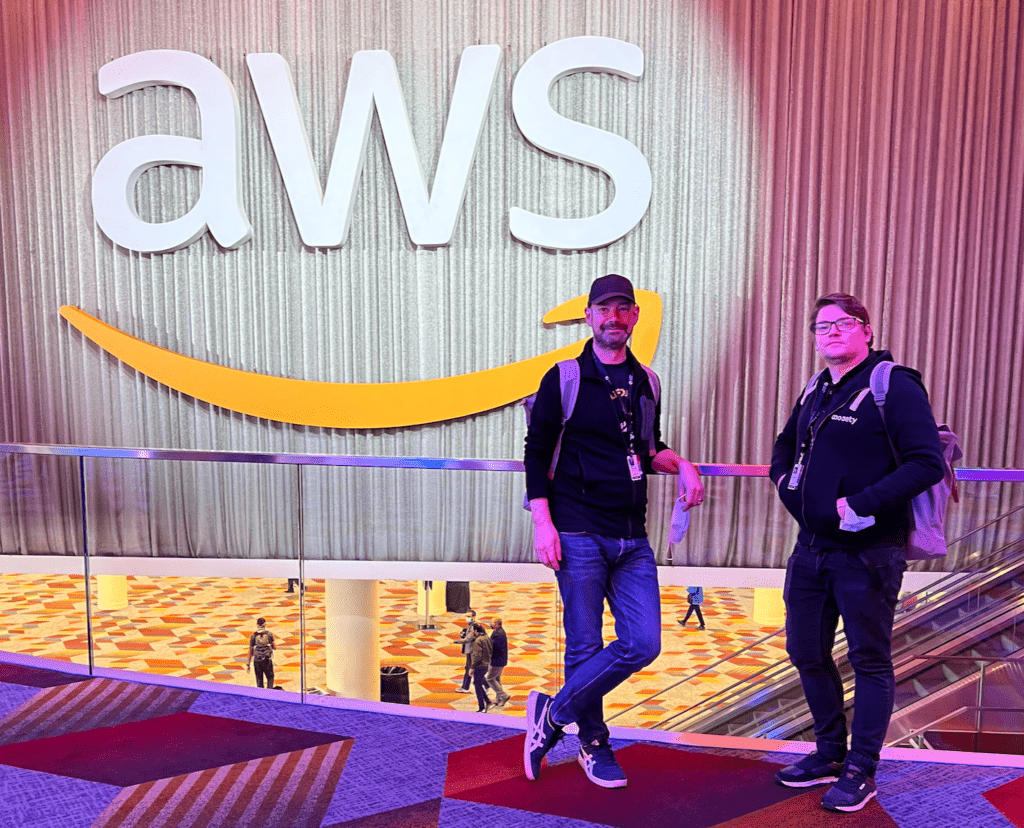
He continued with a series of news about different tools for building services and automating infrastructure, including Amplify Studio(https://aws.amazon.com/amplify/studio/), which is a kind of Visual Basic for web apps. Amplify is a Rapid Development Framework that can be used for web apps and associated backend. Below, the framework uses e.g. DynamoDB, AWS Lambda and API Gateway. When Amplify came out about 3 years ago, it sounded really good. But in practice, it wasn’t quite as easy to work with, especially if you had to make changes to the data model. Maybe Amplify Studio will correct the shortcomings – it looked smart in the presentation, but when you’ve had your heart broken by low-code tools enough times, you naturally become skeptical until proven otherwise. However, integration to other services via AWS CDK and integration into your own CI/CD pipeline was considered, so dare we believe it this time? Judge for yourself, the presentation of Amplify Studio starts here: AWS re:Invent 2021 – Keynote with Dr. Werner Vogels, presented by Ali Spittel.
APIs and CDK
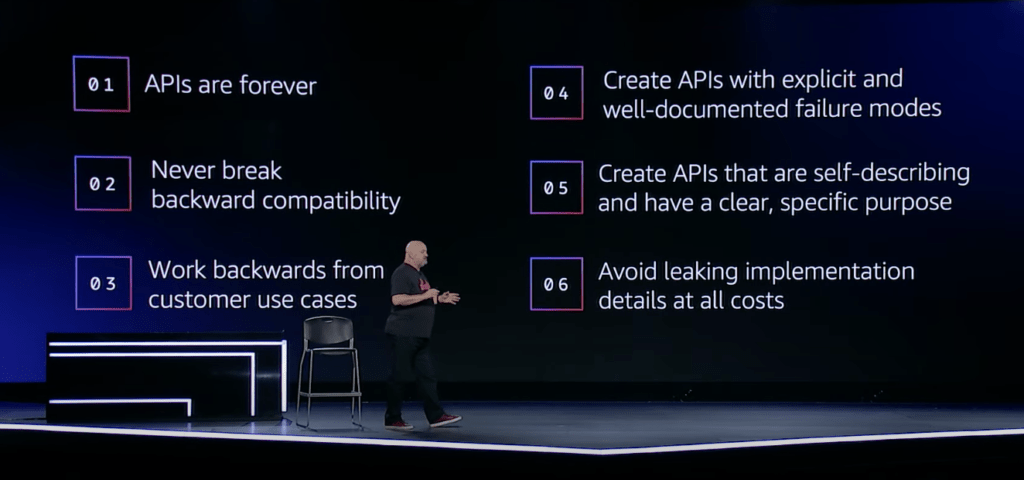
Vogels also talked about a recently launched initiative to better standardize their APIs, namely the AWS Cloud Control API, which is a CRUDL-based approach to managing resources in AWS. The principles behind the design of good APIs in AWS are interesting, partly because AWS almost never removes APIs, but rather releases new versions of them.
Speaking of Cloud Development Kit (CDK), we were presented with CDK v. 2, which includes CDK Watch (a kind of hotswap of resources in the environment). CDK Constructs, which are abstractions used to define infrastructure components. CDK interfaces to a variety of programming languages. It is still relatively new, but an interesting alternative to Terraform, which has a slightly more limited scope, but is fast and has built-in control over the state of the environment.
Sustainability
AWS struck a blow for sustainability with the claim that having infrastructure in their cloud is greener than the average on-premise data center. Soon they will launch the “AWS Customer Carbon Footprint Tool” and also announce a new pillar in their Well-architected Framework, Sustainability(Sustainability Pillar – AWS Well-Architected Framework – Sustainability Pillar
In short, the challenge was formulated as follows: “Turn off the lights” – the resources you don’t use.
Community
Finally, we got a couple of news about how to get qualified help for the challenges you face as a cloud developer, namely the Builder’s Library(https://aws.amazon.com/builders-library/) and a revamped AWS Forum, called Repost: Get expert technical guidance from community-driven Q&A – AWS re:Post – the latter seems to be heavily inspired by Stackoverflow, but that format has proven its worth, so why not build on it.
…And finally
All in all, the conference has been a really good experience. The logistics seemed a bit confusing at first, and the wifi was not very good on the first day – something that was complained about a lot. But already on the second day, a completely new network was set up and it worked fine. There was a lot of time between sessions, but that’s how it is when the event is spread out over 4 large hotel/conference centers. From a Danish perspective, however, it seemed a bit exaggerated that there were shuttle buses between the hotels, which were right up and down from each other.
We took home a lot of learning and inspiration – even the operations manager started to develop business – and some of us even managed to refresh a certification on the way out.
We also managed to see Las Vegas from a distance – the area is desert and a great (and quiet!) contrast to the lights and noise of Las Vegas.

That’s all from Re:Invent 2021 – maybe see you next year?