On our third day in Las Vegas, we had time for some sightseeing after the conference day. We took a stroll past the iconic “Welcome to Las Vegas” sign.

At the conference itself, one of the interesting presentations was about migrating data using AWS Datasync. In addition, we were looking for inspiration for specific customer cases:
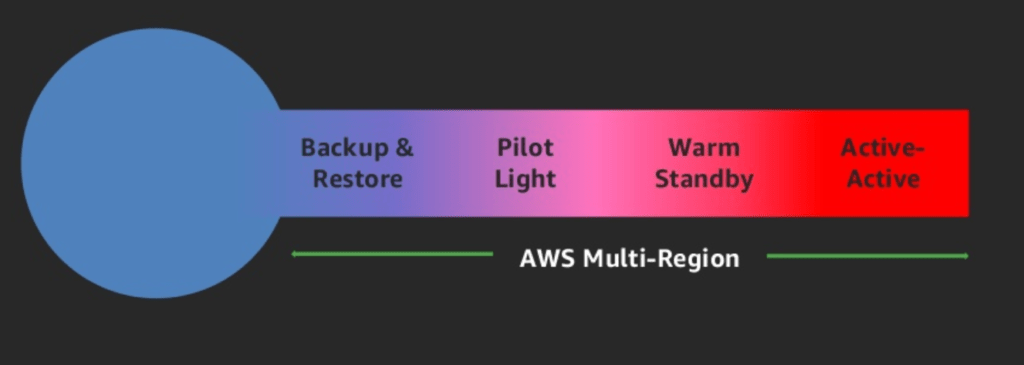
One was about ensuring a very high uptime on a server product (Atlassian Jira and Confluence) where the customer is not ready to move to the data center version. We therefore looked at different disaster recovery strategies that AWS has set up. These strategies make it possible to work with redundancy at the server/infrastructure level if the application layer cannot be used. For example, with warm standby, potential downtime can be kept to minutes as there is another environment ready to take over if the first one stops working.
Another customer has major challenges with GDPR and the Schrems II ruling. They are therefore very interested in implementing “additional measures”, here in the form of encryption of data in the database and on the file system. One advantage of attending the conference is that you can easily find an AWS employee who has insight into the problem and who can help find resources and help take a critical look at the outlined solution. Here, for example, it resulted in considerations about “encryption in transit” of traffic on the private network. Like all architecture, this decision is about trade-offs: If you want a more secure solution, you must be prepared for complexity and increased costs.